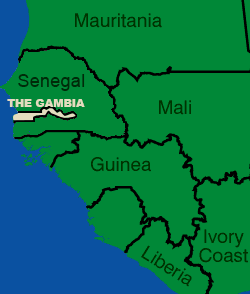
 The Gambia
Population:
2,523,327 (2024 est.)
2,523,327 (2024 est.)
Muslim 96.4%, Nominal Christian 3.5%, other or none 0.1%
English, Mandinka, Wolof, Fula, other indigenous vernaculars
Country Description
List of The Gambia Missionaries
Africa Director
Other Africa Countries
Return to Africa Page
 Eric & Lori Bohman
 Angola
 Benin
Benin Botswana
 Burkina Faso
 Burundi
 Cameroon
 Canary Islands
 Cape Verde
 Central African Republic
 Chad
Chad Comoros
 Democratic Republic of Congo
 Djibouti
 Egypt
Egypt Equatorial Guinea
 Eritrea
 Eswatini
 Ethiopia
 Gabon
Gabon Ghana
Ghana Guinea
 Guinea-Bissau
 Ivory Coast (Côte d'Ivoire)
 Kenya
Kenya Lesotho
 Liberia
 Madagascar
 Malawi
 Mali
Mali Mauritania
 Mauritius
 Morocco
 Mozambique
 Namibia
 Niger
Niger Nigeria
 Republic of Congo
 Rwanda
 São Tomé & Príncipe
 Senegal
 Seychelles
 Sierra Leone
 Somalia
 South Africa
 South Sudan
 Sudan
Sudan Tanzania
 Togo
Togo Tunisia
 Uganda
 Zambia
 Zimbabwe