Through Cloud or Sunshine Abide with Me
by Mary Ray The sound of gentle waves lapping against the seashore, the warm glow of the tearoom lights, and the smell of freshly baked scones topped with strawberry jam and clotted cream made this seem to be the perfect place to be. I sensed that this was going to be a day to remember.
 Leaving the busy A38 dual carriageway, we traveled through the beautiful countryside of Devonshire. Passing through ancient villages, crossing babbling brooks, and seeing sheep lazily grazing on lush green hillsides gave us a feeling of peace and tranquility.
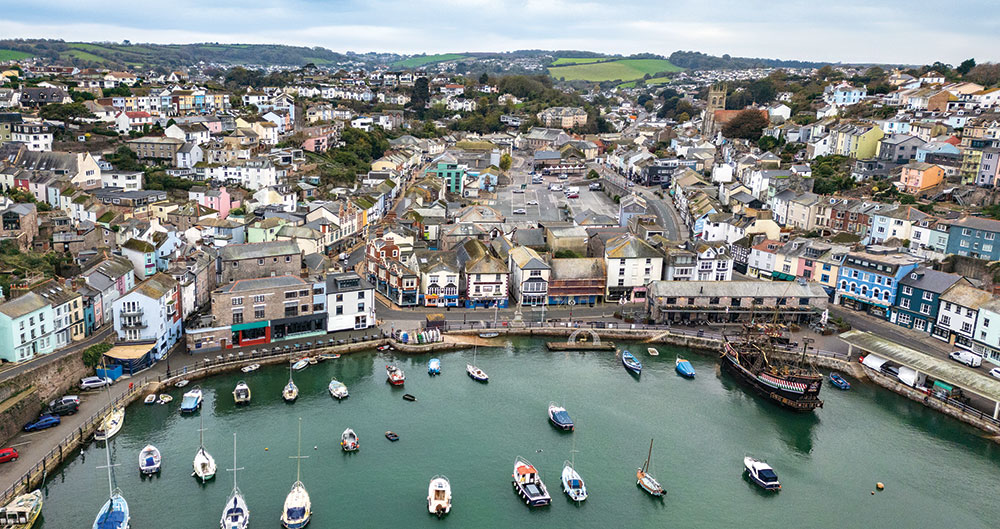
It was midafternoon when we finally reached our destination. From what the locals call “Strawberry Bends,” we could see it up ahead and realized why it is called the English Riviera. The beautiful waters of the English Channel, the fishing boats bobbing up and down in the harbor, the pastel colored Victorian houses perched along the hillside, and the cobbled streets made it look like a page from a fairy tale book.
Brixham has always been a fishing town and was recorded in the Doomsday Book of 1086. At that time, there were only 39 residents. The population in 2021 was a little over 16,000 but since it is a popular holiday destination, the number of people greatly increases during the summer months.
The town played an important role during World War II. American military personnel were stationed in and around Brixham. The harbor was a significant embarkation point for the first US ground troops and heavy equipment destined for Utah Beach on D-Day. Eventually, Brixham was recognized as “the town that helped liberate Europe.”
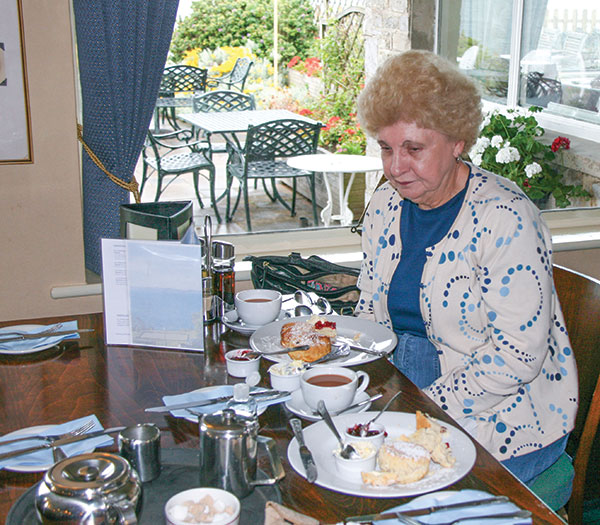 While we appreciated the beauty and significance of Brixham, the place we were excited to see was Berry Head Hotel, which is within walking distance of the town center. Since it was time for afternoon tea, we decided that our timing was just right. After all, who would come to Devon without having a Devonshire Cream Tea, and the Berry Head Hotel Tearoom was the perfect place for it.
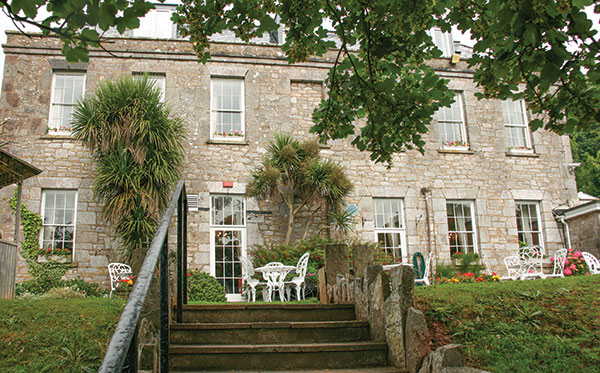
While sipping my tea, I gazed at my surroundings and tried to imagine what it was like for Henry and Anne Lyte to live in such a beautiful place. Of course, it was not a hotel then. It was the home of the Lyte family, was called Berry Head House, and was within a short distance from the All Saints Church of England, where Henry was the Vicar.
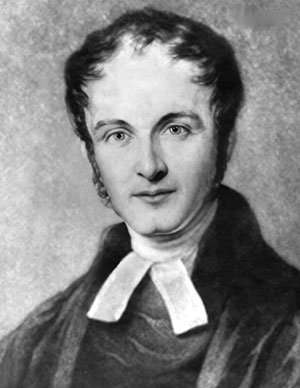 Henry F. Lyte was described as a tall, handsome man who had great personal charm and was known for his humor and wit. He was a scholar, a poet, and a musician. He knew Latin, Greek, and French and had an expansive library. For three years in a row, Lyte won the Chancellor’s Prize for English Verse while he was a student at Trinity College. As a musician, he played the flute beautifully and according to his grandson, he always had his flute with him.
 Born in Scotland in 1793, Henry moved to Ireland when his father, who was a captain in the military, was stationed there during the Napoleonic Wars. As a young boy, Henry was sent to boarding school at Portora Royal School in the county of Fermanagh. His father, who obviously wanted a different lifestyle, sent his wife and youngest son back to England, deserted his family, and married another woman.
Sadly, Henry never saw his mother again. “Memories of his mother constantly proved a source of inspiration to goodness of life, and were sacred treasures of his soul to the very last of his days. From his poem, 'On Dreaming of Mother,' we realize how deeply her image was engraven on his soul.”1 At nine years of age, Henry was abandoned and alone. Dr. Robert Burrowes, who was the Headmaster at Portora, saw potential in the young boy, took him in as an adopted son, mentored him, and paid for his education at Portora and Trinity College.
Lyte planned to study medicine but while attending Trinity College in Dublin, Ireland, he changed his mind (perhaps because of the kindness of the Rev. Dr. Burrowes) and decided to become a minister of religion. He was ordained in the Church of Ireland in 1815 and was a curate (assistant vicar) in Wexford, Ireland, for a short time. To Henry, the ministry was a “profession” and not a “calling.”
Although he said he believed that the Bible was the Word of God, he did not believe that it could be taken literally. He professed to be a man of God, yet, he was a man of little faith. He admitted that he openly mocked the zeal of the evangelicals around him.
During the time that Lyte was a curate, he often visited Rev. Abraham Swanne, who was a rector in a neighboring parish and was dying. They had long and serious conversations about the Scriptures. The dying minister, who had previously believed the same error about the Bible as Lyte, convinced him that they were both wrong and that the Holy Word of God could be taken literally. Observing his friend’s faith and peace, even while facing death, made Henry rethink his own spiritual condition. Suddenly, his eyes were opened to the truth; he now believed every word of the Bible. Nothing less than conversion could have brought about such a change in Henry’s life and ministry. After the death of his fellow minister, Lyte took care of his church until a replacement could be found.
Henry Lyte had never been a healthy man. He suffered with asthma and bronchitis, which had weakened his lungs. Thinking that warmer weather would improve his health, he left Ireland and went to France and Italy to recuperate. He never returned to Ireland but decided to settle in England. It was while he was a curate in Marazion in Cornwall that he met Anne Maxwell who became his wife on January 21, 1818, in Somerset, England. Anne was no stranger to the ministry since her father was a Methodist minister. She was described as compassionate and kind and was an excellent manager of the home and finances.
Lyte had served in several parishes before going to All Saints Church. The new vicar and his family arrived in Brixham in 1824 and from the beginning of his ministry there, it seemed that he had finally found his “niche.” He had always loved the sea so he enjoyed many peaceful walks along the shore as He communed with God. He soon endeared himself to the residents of Brixham, especially to the fishermen.
Much had changed in the life of the Reverend Henry F. Lyte since his ordination in the Church of Ireland in 1815. He had learned that the Bible was the Word of God and could be taken literally. He had discovered that Faith cometh by hearing and hearing by the word of God (Romans 10:17). He now knew that the ministry was a “calling” and not a “profession” and that it could be a “delight,” not just a “duty.”
When Lyte came to Brixham, he was determined to pastor, not only his church but also his city. He joined the school board and eventually became chairman. He founded the first Sunday school in the area and organized an annual retreat for 1,000 Sunday school children with sports, activities, and food. He always shared the Gospel at every event.
Henry reached out to the sailors in the town and organized special Bible studies for them. He especially loved his ministry with the fishermen. He visited them on their boats and in their homes and gave each one a copy of the Bible. Shortly after he arrived in Brixham, the minister attracted such large crowds that the church had to be enlarged.
Henry and Anne certainly had their share of sorrow. The death of their one-month-old daughter Anna Maria brought them deep grief. Together, they walked the trail of tears. Their faith through their own personal sorrow gave comfort and hope to those in sorrow to whom they ministered. Also, because of his poor health, Lyte had to spend long periods of time abroad. This caused sadness, loneliness, and hardship for both of them and for their children.
What is now Berry Hill Hotel was originally built as a military hospital in the early years of 1800. When the hospital was no longer needed, the building was leased to its builder in 1823. It is thought that the Lytes moved into the house sometime during the year of 1834. Henry and Anne soon turned the drab hospital building into a beautiful home. In those days, most vicars’ salaries were meager so it is not known exactly how they obtained the enormous house. Anne had received an inheritance, which probably enabled them to acquire Berry Head House and to travel abroad. Henry was an avid gardener and labored tirelessly to turn the barren grounds of the former hospital into a beautiful English garden. John Appleyard said, “The garden was rich in its luxuriance, as South Devon gardens usually are. Glorious fuchsias, hydrangeas, veronica, Japanese anemones, evening primrose, wallflowers in profusion and roses galore. In this paradise, he experienced perfect peace.”2
 After 23 years of ministry in Brixham, Henry sensed that the shadows were lengthening. He knew it, Anne knew it and so did his congregation. The weight of the ministry seemed heavy, yet he would not allow himself the luxury of rest. He could feel his body getting weaker. He coughed more, and his steps were slower. His walks along the beautiful seashore were fewer. He could no longer climb into the fishing boats and minister to his fishermen friends.
 He and Anne decided that they should go again to Italy and France. Maybe the warmer weather would help him recover as it had in the past. Sensing that this may be the last time that she did it, Anne lovingly packed his clothes. With tear-filled eyes, she prayed that the Lord would allow him to return to Berry Head with her.
The days before his departure, the beloved vicar of Brixham walked along the beautiful seashore behind the home that he loved. He watched as the fishermen tied their boats in the harbor. He walked past All Saints Church where he had preached so many sermons. He looked at the houses on the hillside and prayed for the people who lived in them. Henry was taking a mental picture of every scene so that he could visualize it over and over again. His tears flowed freely as he thought of his mother who had taught him to pray. He felt again the pain of being abandoned as a nine-year-old boy, but then he rejoiced in the knowledge that Jesus had promised to never forsake him but would abide with him forever. After he returned from his walks, although weary, Anne would often see him sitting at his desk at Berry Head House writing.
Because he was so frail, his family was distressed when he insisted on preaching to his congregation once more before he left. Weak and exhausted, Henry preached with great power. He was a dying man preaching to a dying congregation. His hearers seemed to hang on to every word. He reminded his hearers that they all must face death and that they all must account to God. He longed to impress upon them the importance of knowing that Christ was their Savior and that HE was the only one who could give them eternal life.
 In the hours before their departure, Henry and Anne prayed together, exchanged loving glances, and mingled their tears. With heavy hearts, they said goodbye to their beloved Berry Head House. Anne’s heart was breaking. With Henry’s frail condition, she wondered if she would return without him.
After arriving in France, they checked into a hotel, but Henry was very ill. His lungs were so weakened that they could no longer function, and he had influenza and dysentery. Pain and fever racked his body, and his nights were filled with coughing. An English minister who was a resident at the hotel assisted him and prayed with him. In his dying moments, Henry must have thought of his children, the church on the hill, the boats in the harbor, and the fishermen. His ears must have heard again the sound of waves lapping against the shore behind his home at Berry Head.
On November 20, 1847, in a faraway place, Henry F. Lyte closed his eyes in death. His last words were “Peace! Joy!” He was buried in a foreign grave and with the passing of time, it seemed that the upcoming generations would never know that he had lived, but as William Cowper wrote in 1773
God moves in a mysterious way
His wonders to perform;
He plants His footsteps in the sea,
And rides upon the storm.
On August 25, 1847, Lyte wrote a letter to a family friend and described his failing health. In the letter, he also penned a few stanzas of what he called his latest effusion, which was the hymn “Abide with Me.” It was based on Luke 24:29 that says, But they constrained him saying, Abide with us: for it is toward evening, and the day is far spent. And he went in to tarry with them (KJV).
Before leaving, Henry placed a copy of the hymn that he had written into the hands of his daughter Anna Maria. It was not the first hymn he had written. In fact, he had already written 80 others, but it would become the most famous and the most beloved one of all. In the history of Berry Head Hotel, it is recorded “Henry Francis Lyte was best known for his hymns: ‘Praise My Soul the King of Heaven’ and his most famous ‘Abide with Me,’ which he actually wrote in the grounds of the house just prior to his death. The house was passed to his daughter Mrs. Hogg and remained in the family until 1949 when it was turned into a hotel.”3
When the sad tidings of his death came to Brixham, the fishermen wept. His voice would be heard no more in the church on the hill. The home at Berry Head stood silent, lonely, and foreboding. The fishermen, with others, gathered in the church for a memorial service and lifted their voices together to sing “ABIDE WITH ME.”
The little village of Brixham could not keep the hymn “Abide with Me” for its own. Soon, it was being sung all over England and then all over the world, bringing comfort and hope to all who heard it. It was known to be the favorite hymn of King George V. It was sung at the wedding of Queen Elizabeth II and Prince Phillip. It is often sung at special events and it has almost become a national hymn for Great Britain.
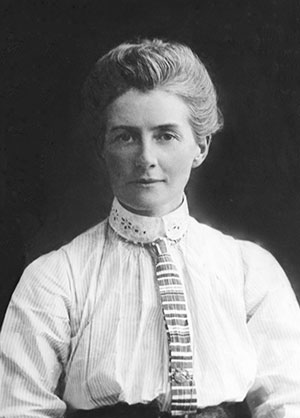 When Edith Cavell, a British World War I nurse, was condemned to death by the Germans for helping wounded soldiers escape, the English Chaplain, Sterling Graham, was given permission to visit her the night before she was shot. Together, Edith and Sterling recited the words of “Abide with Me.”
 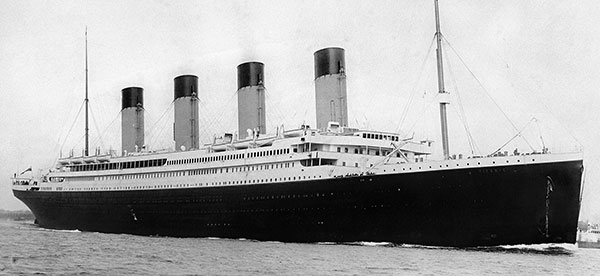 The hymn was repeatedly played by the band of the Titanic as the ship went down. All seven musicians drowned, along with over 1,500 other passengers.
 Brixham’s harbor was a crucial staging area for American forces with many ships loading supplies and troops for the Normandy landings. It has been said that often when American ships going to Normandy during World War II went past Berry Head, the sailors would line the deck of the ship and sing “Abide with Me.”
It was evening and our day at Berry Head was coming to a close. The bells of All Saints Church would soon be playing “Abide with Me” as they do every eventide at 8:00 pm.
I had walked the halls of Berry Head House that Henry had walked. I had strolled along the beautiful seashore that he loved. I had seen the fishermen and their boats in the harbor. I had seen the church on the hill where he preached his last sermon. I had been inspired and encouraged. I had been uplifted and motivated to love my Savior more.
I knew that I could never again sing “Abide with Me” without thinking of a little nine-year-old abandoned boy who found someone who would never leave or forsake him. I was right. It was indeed a day to be remembered.
Oh, by the way. . . the Devonshire Cream Tea was delicious!
SOURCES
Appleyard, John, HENRY FRANCIS LYTE: A Short Biography. London: The Epworth Press, 1939.
A.M.M.H., Remains of Henry Francis Lyte: With A Prefatory Memoir (1850). London: Francis and John Rivington, 1850.
Berry Head Hotel, Brixham. “A History of the Berry Head Hotel.” May 24, 2025. berryheadhotel.com/brixham-history.
Taylor, Isaac. “1867 Maxwell Family - Ocotilla Road 2025. The Family Pen vol 1 pp 298-300, 1867.” Accessed May 24, 2025. www.ocotilloroad.com/geneal/maxwell1.html.
Wikipedia. “BRIXHAM, Town in England.” Accessed May 24, 2025. en.wikipedia.org › wiki › Brixham.
Wikipedia. “Henry F. Lyte.” Accessed April 20, 2025. en.wikipedia.org/wiki/Henry_Francis_Lyte.
1John Appleyard, M.A. D.Litt., HENRY FRANCIS LYTE: A SHORT BIOGRAPHY, (London: The Epworth Press, 1939), 9.
2Ibid., p. 49.
3Berry Head Hotel, Brixham. History of the Berry Head Hotel. 2025 berryheadhotel.com/brixham-history.

 Dr. James Ray