Dayton, TN Where a High School Teacher Tried to Make a Monkey Out of God
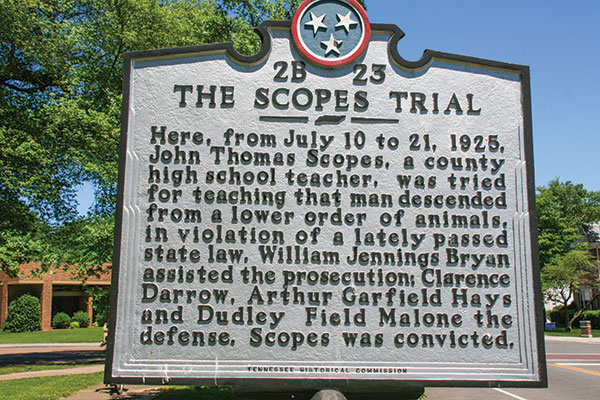
by James Ray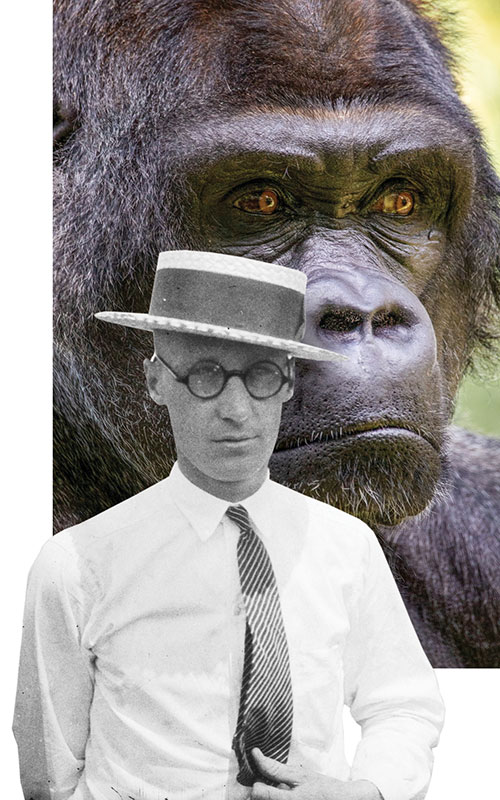 Dayton, Tennessee, is a beautiful little town situated on Richland Creek near the Tennessee River, 36 miles northeast of Chattanooga. Perhaps the reader has never heard of Dayton, Tennessee, but there was a time 100 years ago when the whole world was focusing on the little town. Dayton’s claim to fame was an event that happened in the year 1925. John T. Scopes, a high school science teacher, was put on trial and found guilty of teaching evolution. The state of Tennessee had passed a law which made it a misdemeanor punishable by a fine to “teach any theory that denies the story of the Divine Creation of man as taught in the Bible, and to teach instead that man has descended from a lower order of animals.”1
The trial of John Scopes drew the attention of the entire nation as well as eventually the whole world. Beautiful little Dayton, Tennessee, became the focal point between darkness and light. The trial was led by William Jennings Bryan for the prosecution and the famous atheist lawyer Clarence Darrow who defended the teacher.
I never met William Jennings Bryan. He lived before my era. However, my friend Dr. Charles Weigle did meet him. At 92 years of age, Dr. Weigle led revival meetings at Calvary Baptist Church in Olney, Illinois, of which I was pastor. During that meeting, he told me that he had met William Jennings Bryan once on a train. He said William Jennings Bryan was a real gentleman and a great Christian. He served as the major candidate for his party three times as president. Dr. Weigle said Bryan was defeated by the liquor industry. That industry poured money into the campaigns of those who opposed William Jennings Bryan.
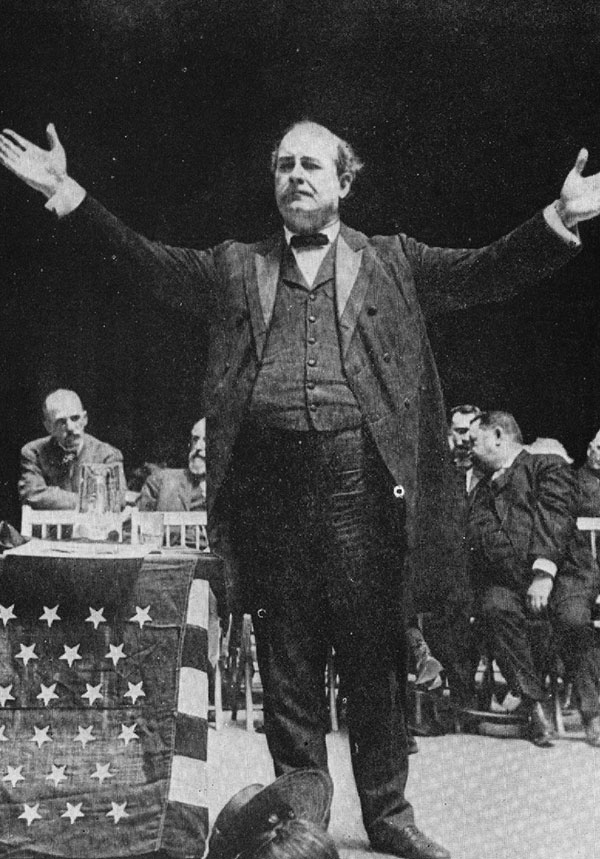
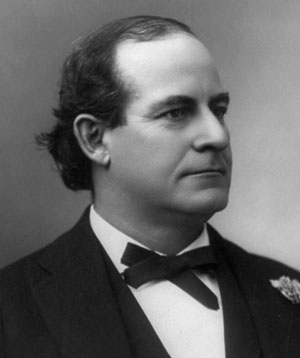 William Jennings Bryan was known as “The Great Commoner” and “The Silver-Tongued Orator.”2 His most famous speech was at the party convention July 8, 1896, in Chicago—a 30-minute speech, which propelled Bryan into national fame. His famous statement that struck a chord in the hearts of common people was “You shall not crucify mankind upon a cross of gold” (from a speech delivered on July 8, 1896, at the Democratic Convention in Chicago).
That statement hurled him on first nomination to be the candidate for the President of the United States. Among those hundreds who heard that speech was a lawyer by the name of Clarence Darrow. He listened as the young congressman swept delegates to their feet, warning of crucifixion upon “a cross of gold.” Although Darrow found the speech simplistic, he wrote that he never heard a speech move an audience the way Bryan’s speech did. Clarence Darrow said that the speech was the greatest ovation that he had ever witnessed. It would not be the last time the two men would meet. They would meet in Dayton, Tennessee, 29 years later, where Darrow would challenge the belief in God and the Bible.
William Jennings Bryan became Secretary of State under Woodrow Wilson and served at that post until 1915. Then he moved to Nebraska, becoming editor-in-chief of the Omaha World-Herald newspaper.
On July 10, 1925, in Dayton, Tennessee, the so-called Scopes Monkey Trial begins with John Thomas Scopes. Scopes was a young high school science teacher. He was accused of breaking the new law by teaching the theory of evolution to his students in Dayton.
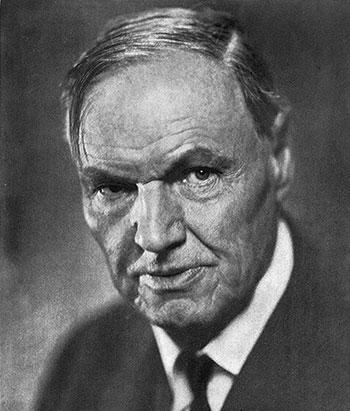 “The fear of God is not the beginning of wisdom. The fear of God is the death of wisdom.”3
 — Clarence Darrow
With local businessman George Rappleyea, Scopes had conspired to get charged with this violation to test the state law. The two of them contacted the American Civil Liberties Union (ACLU) to help with the defense. Christians considered this an attack on Christianity and fundamentalism in particular.
William Jennings Bryan heard of this attack on the Bible and Christianity and volunteered to represent the State of Tennessee. The offer was welcomed by the state. Bryan was a hero of fundamentalism and a three-time presidential candidate. He was well known throughout the nation and an outstanding public Christian.
Soon after Bryan was engaged to represent the State of Tennessee, the well-known atheist attorney, Clarence Darrow, volunteered for the other side defending Scopes. Clarence Darrow was famous (or notorious) for defending people who had committed murder and other dastardly crimes. Darrow described himself as an agnostic and he spent most of his life fighting a God he claimed did not exist. Clarence Darrow scorned belief in the Bible, the existence of God, and the possibility of a hereafter.
He thought that teaching creation in school was promoting ignorance and depriving children of science. He read the Bible but scorned most of it.
He agreed to join the ACLU in planning the defense. This trial would be considered as one of the most famous trials in United States history. It would be a trial not to test the Tennessee law but to test the Word of God and creation itself. Darrow somehow thought that to discredit those who believe the Bible to be the Word of God would advance the cause of agnosticism and enlighten what he considered existing ignorance.
The trial in the small village of Dayton, Tennessee, would have national implications. William Jennings Bryan was well known in the country as a champion of faith in God and a defender of religious liberty. If Darrow could bring William Jennings Bryan down, he reasoned that it would enforce his argument against belief in God and faith in the unseen. This was his epic chance to discredit belief in God. Two of the most well-known men in the century Clarence Darrow and William Jennings Bryan would face each other in debate and the causes would be belief in God or humanism.
 Thomas Scope and his violation of the new state law would be left in the dust in the battle. This would be a battle for the defense of God and the Bible. For a moment of time, the battle for light and darkness, good and evil, heaven or hell would be held and the stage would be Dayton, Tennessee.
Dayton in 1925 had a population of around 3,000. The highly publicized trial brought in thousands more, including reporters from other states. It was hot in Dayton in 1925. The heat was staggering.
Dayton was alive with displays from Christians and preachers who came into the town to support Bryan. They set up displays and sold Bibles. There were refreshment stands.
At the trial William Jennings Bryan shed his coat and debated his case in shirtsleeves. The New York Times called it “the most amazing courtroom scene in Anglo-Saxons history.” Genevieve and John Herrick in their book The Life of William Jennings Bryan described the scene in Dayton.
“Into Dayton flocked a hundred or more newspaper men from all parts of the country. Some came from Canada. Over the wires, thousands upon thousands of words were sent out to papers all over the globe. London papers were getting cabled dispatches of 500 to 1,000 words daily. . . . In the stifling heat the audience listened. They crowded the seats, stood in the aisles, and overflowed into the hall.”4
There was little accommodation available. The hotel Aqua was booked up with no rooms free. People rented their homes to those who came. The Scopes trial began and the jury was chosen. The state presented it’s case. The defense admitted to the charge and then sought to put a dozen well-known scientists on the stand to prove that evolution and the Bible were not in conflict. Bryan protested that the two really could not be reconciled.
He argued against the scientists admission as witnesses. Bryan said, “We do not need any expert to tell what the law means.”5 The judge agreed and the scientists were not allowed to take the stand. Standing before the bar in his shirtsleeves, the silver-tongued orator stated that this was an attack on the faith. Bryan said,
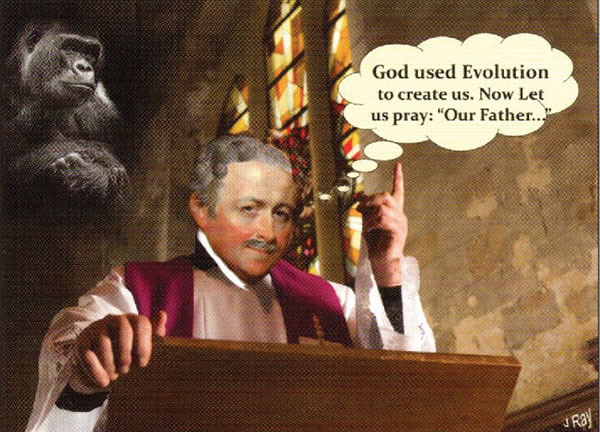
“My friends, if a man and monkey were in the same class called primates it would mean they came up from the same order. . . . The Christian believes that man came from above. . . . The evolutionist believes he must have come from below, and that he is from a lower order of animals. . . . The parents have a right to say that no teacher paid by their money shall rob their children of faith in God and send them back to their homes, skeptics, infidels, agnostics, or atheists.
Never have they traced one single species to any other, and yet they call us ignoramuses and bigots because we do not throw away our Bibles and accept evolution.6
The Bible is the Word of God, ‘The Bible is the only expression of man’s hope of salvation. The Bible, the record of the Word of God, the Saviour of the world, born of a Virgin Mary, crucified and risen again.’ ” 7
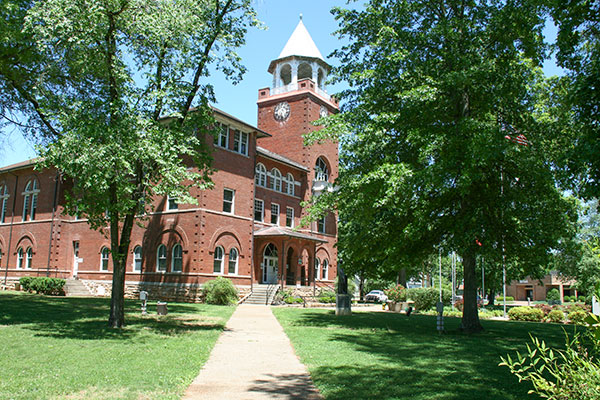 From that point Bryan eloquently defended the merits of the law and nonsense of evolution and Darwin.
It is reported that at the conclusion of Bryan’s remarks, the audience, including the fundamentalist and the evolutionist, applauded. 8
The remainder of the trial was moved to the outside on the courthouse lawn to protect the building from the weight of the hundreds of people jammed into every space as well as to mitigate the stifling heat. They had set crude wooden benches made of planks set across squared logs for seating. When these were filled, the remainder of the crowd stood.9
Darrow had lost his scientific witnesses. His case had hung heavily on their testimony. Not to be undone, he decided to call William Jennings Bryan to the stand. If he could humiliate Bryan, he had a chance of turning things around. Clarence Darrow remembered the young man of 29 years past when that same young man, William Jennings Bryan, swayed a multitude of politicians to their feet at a convention. Judge John Raulston asked Bryan if he wanted to take the witness chair. Bryan said, “Only if I have a similar opportunity of questioning Darrow.”10
William Jennings Bryan took the witness chair to be questioned by Darrow. For two hours Darrow drilled him on the whale swallowing Jonah, the sun standing still, Adam and Eve, the seven days of creation, the inspiration of the Bible, and other Bible miracles. Bryan answered the challenges biblically. He did not try to explain how God ordered the miracles but declared his belief that God could do anything He willed.
The questioning went on for about 2 hours when Judge John Raulston ordered that the whole session be deleted from the records as having no bearing on whether the law on evolution was legal. The charge was that Scopes had violated the law of Tennessee. The jury had not witnessed Darrow’s questioning of Bryan.
Clarence Darrow saw the writing on the wall. He would lose the case. Probably knowing that his case was doomed and not wanting to face Bryan as was agreed upon, Darrow in his closing remarks asked the jury to return a verdict of guilty so that the case might be appealed. Of course, when the defense pled guilty the trial was over. By state law, that would end the deliberations and any further proceedings would be canceled. Darrow would not be cross-examined by Bryan. Without a doubt, he remembered the ability of Bryan to move an audience. When he heard Bryan’s speech in Chicago 29 years past, he wrote that he never heard a speech move an audience the way Bryan’s speech did. Clarence Darrow said that the speech was the greatest ovation that he had ever witnessed.
 William Jennings Bryan was disappointed, having been deprived of questioning Clarence Darrow, but he had won the day. Scopes was guilty and the law against evolution stood.
It took the jury nine minutes to proclaim Scopes guilty of violating Tennessee Law. Scopes was declared guilty and ordered to pay $100 minimum fine ($1,367 in today’s currency).11 William Jennings Bryan was an orator. Darrow’s cold and hopeless agnosticism was unconvincing. Part of Byran’s closing speech, not given, but released to the public, would have been:
“Evolution is not truth; it is merely a hypothesis—it is millions of guesses strung together. . . . Again force and love meet face to face, and the question, ‘What shall I do with Jesus?’ must be answered. A bloody, brutal doctrine—Evolution—demands, as the rabble did nineteen hundred years ago, that He be crucified. That cannot be the answer of this jury representing a Christian state and sworn to uphold the laws of Tennessee. Your answer will be heard throughout the world; it is eagerly awaited by a praying multitude. . . . If . . . the law is upheld and the religion of the school children protected, millions of Christians will call you blessed and, with hearts full of gratitude to God, will sing again that grand old song of triumph.
Faith of our fathers, living still,
In spite of dungeon, fire and sword;
O how our hearts beat high with joy
Whene’er we hear that glorious word!
Faith of our fathers! Holy faith!
We will be true to thee till death!12
Some writers suggest that it was a stroke of genius to put Bryan on the witness chair. In reality, it was desperation. Darrow’s scientific witnesses had been denied and there was nowhere else for him to go.
A few days after the trial ended, still in Dayton, in the home of Richard Rogers, a Dayton druggist, Bryan had gone to his room for a nap after a hearty meal. The time was about 1:30 in the afternoon. He gave instructions that he should be awakened about four o’clock.
At four o’clock the family chauffeur went in to wake him. William Jennings Bryan had gone to sleep, his heart had stopped, and he had gone to Heaven. Beside him lay his Bible.
On the day before he died, Bryan had made a trip to Winchester. On the way to Winchester, he had spoken to a great throng of people at Jasper. At Fairgrounds later in the day, he addressed an audience of 8,000. Bryan’s train was like his campaign special of 1896. At town after town, the Great Commoner made speeches.
He hailed the conviction of Scopes as a great victory for the cause of Christianity and a staggering blow to the “power of darkness.” Bryan covered 200 miles and talked to more than 50,000 people on the day before he died. When he died, telegrams and letters by the hundreds from all parts of the United States and the world poured in. The flags over Dayton were lowered to half-staff.
His friend, President Calvin Coolidge, sent a long telegram of sympathy to Mrs. Bryan. Even Clarence Darrow felt the loss and said, “I have known Mr. Bryan since 1896 and supported him twice for President. I always respected his sincerity and devotion.”13
The death of William Jennings Bryan had been untimely but his life up unto his last day had been ETERNAL.
Great crowds packed the New York Presbyterian Church with hundreds standing outside in the rain. Bryan was buried in Arlington National Cemetery after he died in Dayton, Tennessee, on July 26, 1925, at the age of 65.
 Thousands of people lined the tracks of a special train that carried William Jennings Bryan to his burial in Arlington National Cemetery. Another service followed in a Washington church. Right as the procession started to move down the aisle a quartet sang:
“One sweetly solemn thought
Comes to me o’er and o’er;
I am nearer home today,
Than I have been before.”
William Jennings Bryan University was chartered in 1930 in Dayton and admitted its first class in the fall of that year. Its stated purpose was, and is, to provide “for the higher education of men and women under auspices distinctly Christian and spiritual.” In 1993 the name was shortened to Bryan College.
When Clarence Darrow was seventy-five, he wrote:
“At seventy-five, I am not sure of how much or how little I have really accomplished. I am reminded of what Simon is reported to have said when Jesus came to his boat in the early morning, ‘Master, we have toiled all night, and taken NOTHING.’”14
Clarence Darrow’s life was consumed with defending murderers and people who had committed grievous crimes. He had been determined in his fight against a God who “did not exist.” When he summed up his life, the total was—NOTHING. At Clarence Darrow’s funeral, only a few friends were present. There was no one present who said, “This man gave me hope” or “I am a better person because this man lived” or “This man comforted me in my grief” or “This man gave me a purpose for living.”
We have toiled all night,
and taken NOTHING!!!
Editor’s Note: Clarence Darrow NOW believes in God!
1Text from Acts of the State of Tennessee: Passed by the Sixty-Fourth General Assembly: 1925, (1925), 50-51.
2Creative Commons Attribution – Share Alike License Famous People
3Clarence Darrow, Why I Am An Agnostic, Little Blue Book No. 1500 (Girard, KS: Haldeman-Julius Publications, 1929).
4Genevieve and John Herrick, The Life of William Jennings Bryan (Buxton Publishing Co., 1925), 350, 354.
5Ibid., 354.
6Ibid., 355-356.
7Ibid., 361.
8Ibid., 361.
9Ibid., 363.
10Ibid., 364.
11A year later, the Tennessee Supreme Court reversed the decision of the Dayton court on a procedural technicality—not on constitutional grounds as Darrow had hoped.
12Ibid., 406, 407.
13Ibid. p 410.
14Clarence Darrow, The Story of My Life, A Project Gutenberg of Australia eBook,(1932) Posted October 2005 THE STORY OF MY LIFE (gutenberg.net.au).
Next Article

 Dr. James Ray