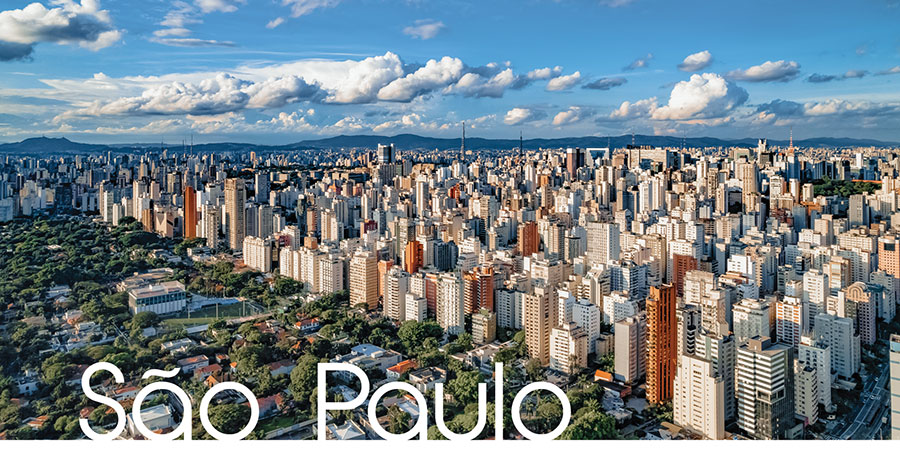
São Paulo
Developing an Urban Burden for South America's Largest City! Serving in Brazil, South America
By Sean Lunday
 And when he [Jesus] was come near, he beheld the city, and wept over it. (Luke 19:41)
The metro area population of São Paulo, Brazil, in 2023 was an estimated 24 million people, the largest city in South America. This city’s population is greater than the population of 140 countries in the world. In a city this large there is no lack of religion and religious sects. What is lacking are Bible-believing churches. Though missionaries have been in the country for years, most avoid the BIG city. This would explain why we have only four BIMI affiliated churches in the entire São Paulo city limits. Recently, God has given us an amazing opportunity to build the fourth church in this enormous metropolis.
Why such a lack of missionaries? There are the obvious reasons why one would want to avoid the urban areas. It is a place filled with gangs, violence, crime, and dirt. There is often overcrowding, traffic, noise, and the cost of living is usually more expensive. The overabundance of sin in the big city and a lack of personal security are often a major concern. Why go to a place like that? Missionary to New York City Matthew Recker in his book Behold the City poses the question, “What was Paul’s attitude toward the largest city of his day, Rome?” [Rome was a city with a population of] “approximately four million people [at that time. Throughout] “his missionary journeys, Paul had seen the tremendous effect of urban ministry in Philippi, Corinth, and Ephesus. Then he said, I must also see Rome (Acts 19:21). . . . Paul understood that one of the best vehicles for the propagation of the Gospel was the city. Since all roads led to Rome, Paul knew that all roads led from Rome and that as the Gospel broke into Rome it could also branch out from Rome. Since Rome had conquered the world, all the world was in Rome. He had the opportunity to reach the world in one place.”
As missionaries in Brazil for 30 years, we have seen the great potential of reaching South America and the world through the large urban areas. São Paulo is known as one of the most ethnically diverse cities in the world. For example, in this city one can find the largest Japanese, Italian, and Lebanese communities outside of their respective countries. We can literally reach the world through the largest cities of South America. If we are to carry the Gospel to and through the great population centers of our day, we must have the same urban burden that Paul had for the largest metropolis of his day. The Apostle Paul had a strategy and we see in Acts a manual for urban church planting. Jesus told the disciples that they should not depart from Jerusalem, but wait for the promise of the Father (Acts 1:4). The disciples filled Jerusalem with the doctrine of Christ (Acts 5:28). The Gospel then penetrated the surrounding areas of Judaea and Samaria. We have been commanded by Christ to teach all nations and to teach these disciples to observe all things that Jesus has commanded us. The Apostle Paul was willing to adapt strategy to various cultures in order to preach the Gospel in an understandable and relevant way. The methods to evangelize may change but the message of the Gospel always remains the same. We can think outside the box as long as we do not think outside the Bible. Here are some of the strategies we have incorporated with regards to inner city church planting:
 Sports Ministries are a tool we have used to expand opportunities to connect with our community. Soccer is the “unofficial religion” in Brazil and much of Latin America. In one of our churches, a soccer ministry was begun, even before the church was established as a means to engage the community and develop a prospects list. By engaging our community on this level, we were able to break down many cultural, racial, and religious barriers unlike any other means of evangelizing. Today, many of those young boys who were reached through soccer are now married men and spiritual leaders in churches with their families and some are even pastors.
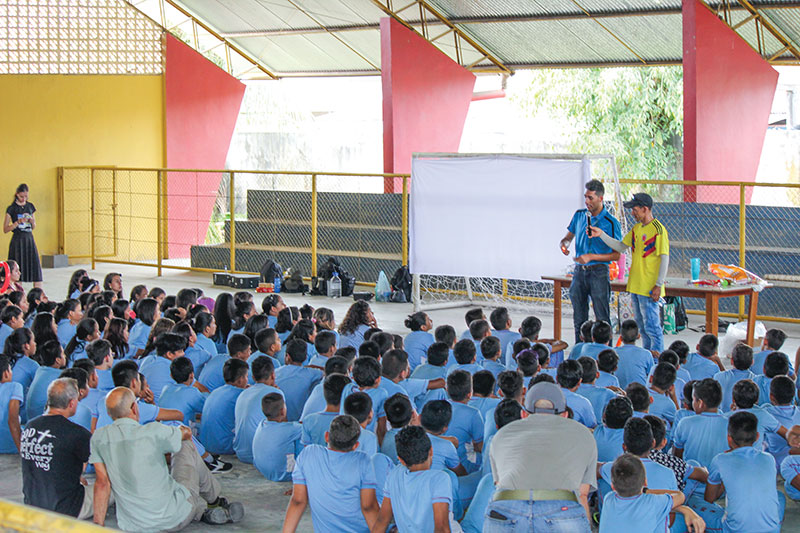
 Public School Ministries have been an effective tool in reaching the youth and showing spiritual support for families in the community. Though schools in the United States may be closed to teaching the Bible on school property, in South America we have found that schools are very open to allowing us to come teach on a biblical worldview. Due to their roots in Catholicism, many Latin countries have had religious education as a compulsory subject in the public schools system, but with the lack of Catholic priests, they have allowed us to come in to fill that void with Bible teaching.
Literacy Ministries have proven very effective in reaching the inner city community where there is a higher rate of school dropouts and adult illiteracy. The wife of one of our deacons, as a new convert, could not read the Bible when my wife led her to Christ many years ago, but now she is one of our Sunday school teachers. One of our churches became a place of reference for the public school to send adults for literacy classes.
Good News Bible Clubs are led each Saturday by evangelism teams from our church to teach the Bible in impoverished neighborhoods in our community. Our teams will arrange to meet in someone’s garage or home consecutively for six Saturdays, each week teaching the five principles of the Wordless Book. The sixth Saturday is an opportunity to draw the net with the Gospel and connect them with the church.
Bus Ministries, though used in the United States since the early 70s, have been a relatively new evangelistic tool among our churches in South America. This is mainly due to the high cost of upkeep or rental, yet many of our church people have been challenged to step up and support the ministry in different ways. We have found that many of our people who get involved in reaching people through the bus ministry have gone on to surrender their lives for ministry. There is something about reaching people on a weekly basis that gives one a burden to do that full time.
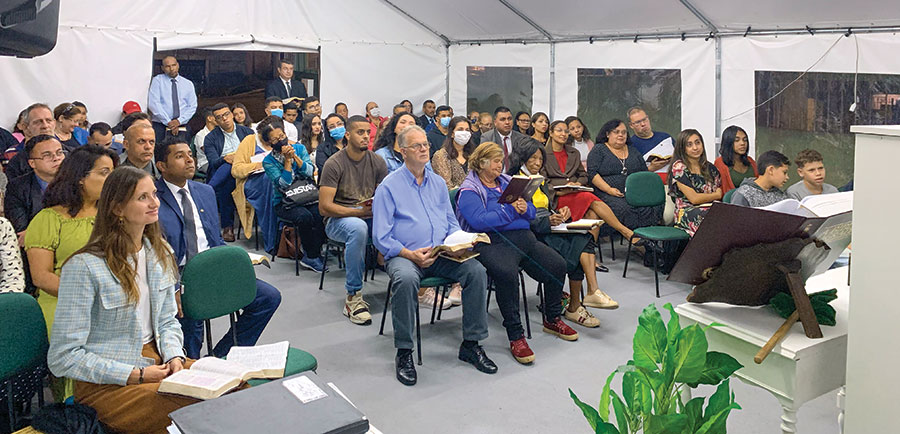
Small Group Bible Studies are done in the homes of church members each night of the week as a tool to reach their neighbors. The trend in the big cities is for more and more people to seek security by living in closed communities or high-rise apartment buildings that have a guarded entrance policy. We have seen door-to-door evangelism be an effective tool in our churches, but with the increase of the population living in high-rise apartment buildings, it has been nearly impossible to gain entrance to go door knocking. São Paulo has the highest number of apartments in Brazil at 1.4 million units. Approximately 35 percent of its population or 8.4 million people now live in apartment buildings according to the recent census. That is a large segment of the population that we would not have access to knock on their doors were it not for the small group Bible Studies during the week. It is a great way to see the church living out Acts 5:42, And daily in the temple, and in every house, they ceased not to teach and preach Jesus Christ.
Jesus beheld the city and wept! His burden was for the urban population—lost in sin. When we arrived as missionaries in 1993, almost 70 percent lived in urban areas, but by 2023, 81.87 percent of the population in Latin America live in urban areas. This makes Latin America the most urbanized region in the world. What an opportunity we have to reach this generation! We can literally reach the world through our cities. Jesus said, I must preach the kingdom of God to other cities also: for therefore am I sent (Luke 4:43).
We have missionaries building churches in South America’s largest metropolitan areas. If you would like more information on how you can have a part, please contact Sean Lunday.
Next Article: Medical Missions Trip — Amazon Basin

